Built for the lifeI'm actually living.
I'm an SRE by trade, a woodworker by weekend, and someone who went looking for software that fit my actual life — not a sanitized version of it. When I couldn't find it, I built it. That's Nintek.
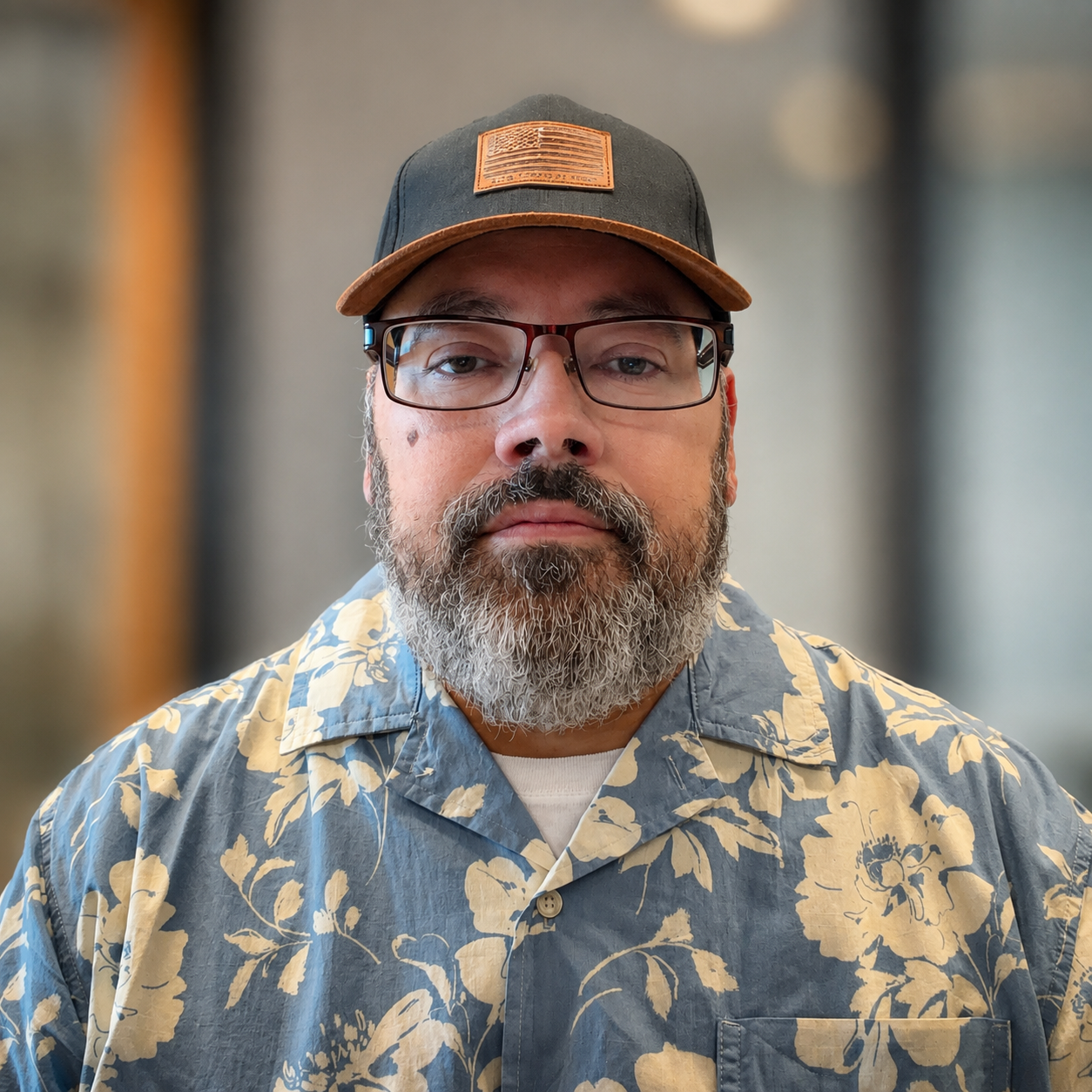
An SRE who lives in terminals and docs.
My day job is keeping systems running. That means notes — a lot of them. Incident timelines, runbook tweaks, things I figured out at 2am that I absolutely cannot lose. I tried every notes app and none of them felt right: too cluttered, too eager to sync everything to someone else's cloud, too slow to open when I'm already in the middle of something.
Tabloom became the notebook, PulseWirebecame the evidence-linked reader, and Prism became the focused AI workbench. Lantern holds long-form learning while Cairn stays focused on certification.
A hobbyist with a disorganized shop.
I've been doing woodworking long enough to have a real shop — table saw, router table, the works. And long enough to know the frustration of starting a project without being able to answer basic questions: do I have enough walnut for this? Where did I put the pocket hole jig? What were the measurements on that last cut list?
Workshop is a build log — projects, cut lists, material counts, the notes I used to scribble on scrap wood and then lose. ShopKeep is the inventory layer: what's in the shop, where it lives, and when I'm running low on something. Together they're the shop foreman I never had.
When the numbers started to matter.
A while back, I started a new health chapter — the kind where you suddenly have metrics to track that you'd never paid attention to before. Weight trends, doses, how you're actually feeling week over week. I went looking for an app to help me stay on top of it and found the same thing everywhere: designs that felt clinical, privacy policies that read like a data harvest, and UX clearly made for someone who wasn't me.
Tare is the app I wished I had. It tracks the metrics that matter on a GLP-1 journey, smooths out the daily noise so you can see the actual trend, and keeps everything on the device. The iPhone version has no account at all — your history syncs through your own private iCloud, and nobody else has a copy.
Tools that escaped the original household hub.
Some parts of the original household system became clearer when they stopped pretending to be one product. ShapePilotowns approachable 2D and 3D design for fabrication. Marqueeowns private media-library operations. Watchtowerowns infrastructure monitoring and alerting.
The split is a product boundary, not a new portal. Each app has its own source, identity, and release evidence; Hearth no longer markets those extracted tools as rooms inside the current runtime.
The household that runs on lost receipts.
I cook, I do my own maintenance, and I've got a property with opinions about when things need attention. The problem is the paper trail — or the lack of one. Where's the HVAC filter size? When was the last time the water heater was serviced? What was in that marinade everyone loved?
Hearth is the current household and property fieldbook: maintenance, inventory, yard, garden, pool, recipes, and the work that needs attention today. Infrastructure monitoring now belongs to Watchtower; it is not a legacy room inside Hearth-v2.
Native status belongs to each product.
Tare, ShopKeep, andCairn have native builds with different private or blocked release states. Watchtower has a private iOS companion whose retained Hearth identifiers are implementation detail, not product naming. Workshop’s native client is archived.
None currently has a public App Store listing. The portfolio does not infer prices, dates, TestFlight access, or acquisition links from a build simply existing.
Web and native are not the same promise.
Installability and offline behavior are product decisions, not a portfolio-wide badge. These boundaries are the current public policy:
- Tare
- The browser product is retired. Production web traffic is relay-only for optional native AI features; there is no Tare PWA, offline web app, browser sign-in, or web background-reminder claim.
- Workshop
- The web workspace is online and account-backed, not an installable or offline PWA. It is the supported Workshop client.
- Cairn
- The web workspace is online and account-backed. CairnNative is a separate offline product with private iCloud sync; the two products never share progress or account data.
Nintek is a one-person studio. Every app is private by default, built to last, and made because I needed it first. If any of this resonates — or if you've got something you're missing —get in touch.